Thoughts on the Behavioural Economics of Education

I’m in the second year of my PhD, and I’m working to develop a research program; hopefully one that gets me a finished dissertation as soon as possible.

I’m drawn towards studying education because (1) I have spent my entire life in schools and (2) schools are seriously, and obviously, messed up. The marginal benefit of an additional perspective on education could be very high if that perspective were to shape education reform in some way.
Source: SMBC
Source: SMBC

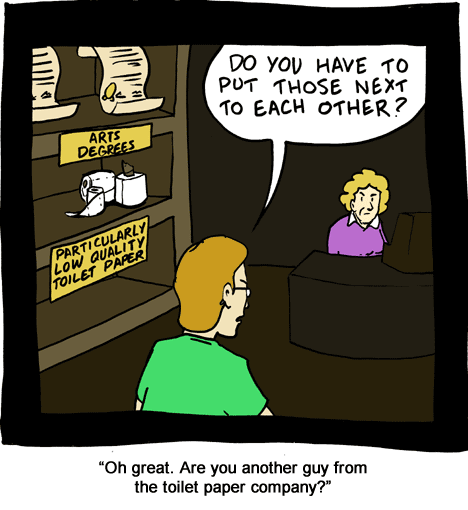
It’s a cliché to make fun of “soft” degrees, so I’m surprised there isn’t a large body of research on why people choose to pursue them anyways. However, there is a body of research on why people fail to treat education as an investment more generally, as detailed in the working paper “Behavioral Economics of Education: Progress and Possibilities” by Lavecchia, Liu, and Oreopoulos. To avoid typing out Lavecchia, Liu, and Oreopoulos many times, and to make it seem like I’m periodically pausing to laugh, I will refer to them as LOL.

LOL use the dichotomy of “system 1” versus “system 2” thinking. System 1 is the unconscious, mostly automatic part of our brains that says “Don’t get out of bed, it’s warm and nice here and getting to work on time isn’t so great anyways.” System 2 is the part that rationally deliberates our long-term choices and says “You need to get up and go to work because working yields the following long-term benefits: (1) wages, (2) the promise of future wages, (3)…” LOL include the obligatory footnote saying that neuroscientists dispute whether this is actually what the brain is doing, but go on using the dichotomy anyways because it’s an extremely useful way to organize our thinking about the brain even if that’s not how it literally works. (more…)

The post Thoughts on the Behavioural Economics of Education appeared first on The Economics Detective.
Links: Capitalism Overcomes Marx and Lenin

Marx Grave

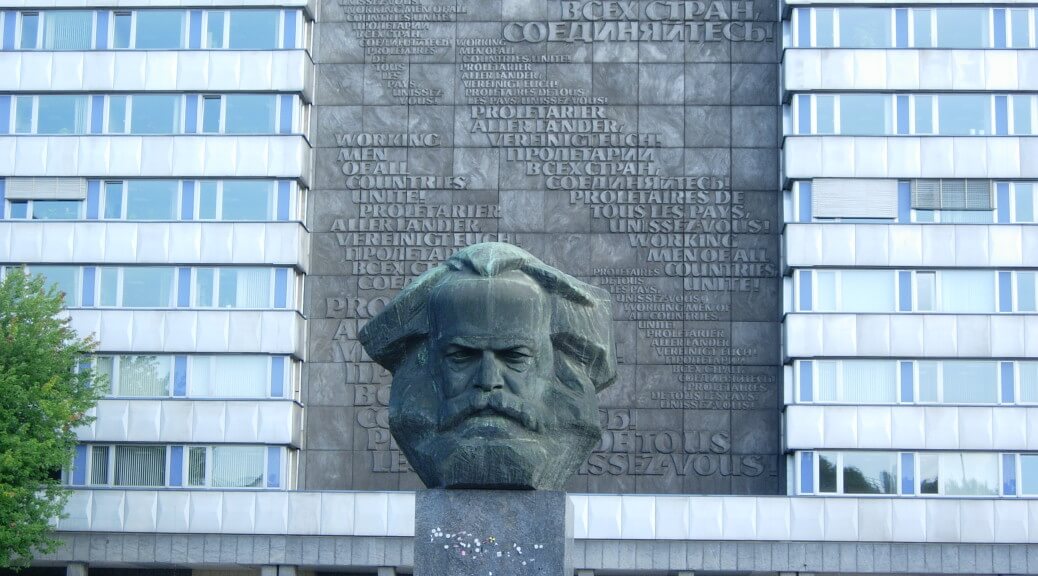
In two unrelated stories, Karl Marx’s grave charges a very un-communist entry fee, and a statue of Lenin was converted to Darth Vader (with free wifi!). You win this round, capitalism!

“NPR Voice” is radio professionals’ attempt to make highly scripted content sound spontaneous. As a podcaster, I’ve never had to deal with the problem of sounding too scripted! (h/t to Tyler Cowen)

Bryan Caplan gives a post-script to an immigration debate with Mark Krikorian:

In my talk, I suggested that open borders would look like an upscale version of the migration-fueled growth that China and India have enjoyed for the last few decades.  Mark accepted the comparison, then turned up his nose at China’s polluted urban centers.  Do I call that progress?

Absolutely.  China has a long way to go, but its growing cities – warts and all – are an earth-shaking improvement over the wretched rural poverty they’re steadily eradicating.  Mark’s cavalier attitude towards the tremendous accomplishments of the Chinese is revealing.  Instead of suppressing his myopic disgust for the ephemeral drawbacks of progress, he revels in it – and encourages others to do the same.  It’s no wonder Mark rejects the most promising way to end global poverty in his lifetime.  He has little appreciation for the amazing progress he’s already lived through.

Also, preschool makes non-immigrant children worse at school by the second grade. First grade teachers report that preschooled students feel more negatively towards school. Sounds like being in school causes you to hate school, which makes you bad at school. This could easily be solved by abolishing school. On a related note, here’s David Friedman in the SSC comment section discussing unschooling.

Speaking of SSC, Scott Alexander chides leftists by pointing out that Donald Trump has high minority support for a Republican, while Bernie Sanders supporters are disproportionately white. Shall we conclude that Bernie’s policies are particularly bigoted and racist? No, that would be silly, but it’s just as silly when Bernie’s supporters throw the same accusation at other groups.

The post Links: Capitalism Overcomes Marx and Lenin appeared first on The Economics Detective.

Links: Capitalism Overcomes Marx and Lenin

In two unrelated stories, Karl Marx’s grave charges a very un-communist entry fee, and a statue of Lenin was converted to Darth Vader (with free wifi!). You win this round, capitalism!

“NPR Voice” is radio professionals’ attempt to make highly scripted content sound spontaneous. As a podcaster, I’ve never had to deal with the problem of sounding too scripted! (h/t to Tyler Cowen) (more…)

The post Links: Capitalism Overcomes Marx and Lenin appeared first on The Economics Detective.